The short version
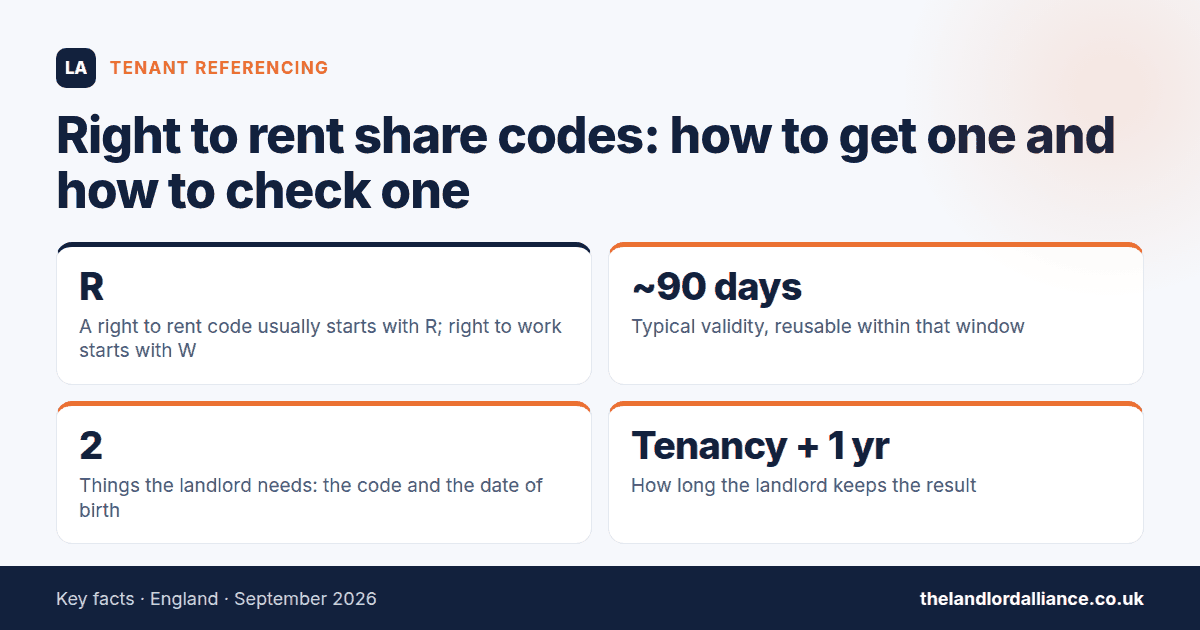
A right to rent share code is a nine-character code that lets a landlord look up someone’s immigration status online instead of handling documents. The tenant generates it on GOV.UK and gives it to the landlord along with their date of birth; the landlord enters both at the right to rent checking service and gets a page confirming what the person is allowed to do. It is usually valid for about 90 days and can be used more than once in that window. Two things trip people up: British and Irish citizens cannot get one at all, and a right to work share code will not work — the two are different codes for different checks.
What a share code is, and what it is not
Since physical biometric residence permits stopped being issued, most people with UK immigration permission hold that status digitally in a UKVI account as an eVisa rather than as a card. The share code is how they let someone else see a slice of it. It is a lookup key, not a document: it reveals only what is relevant to the check being done, and only for as long as it is live.
It is not proof of identity on its own. The landlord still has to be satisfied that the photograph shown by the service is the person in front of them — that step is part of the check, not an optional extra.
The most common mistake on this page’s subject. British and Irish citizens cannot obtain a right to rent share code. If a tenant tells you they cannot generate one, that is very often the reason, and the answer is a passport check or a digital verification provider — not a stalemate. Asking a British citizen for a share code they cannot get is a good way to lose a decent tenant over nothing.
If you are the tenant: getting a code
- Go to the GOV.UK service to prove your right to rent in England.
- Enter your date of birth and the details of your biometric residence permit, passport or national identity card, or sign in to your UKVI account.
- Confirm your identity and choose to share your status with a landlord.
- You are given a code beginning with R. Send it to your landlord together with your date of birth — the code alone is useless to them.
Generate a right to rent code, not a right to work code. They look similar, they are not the same, and a W code entered into the right to rent service will simply fail.
If you are the landlord: checking a code
You need two things from the tenant: the code and their date of birth. Enter both at the GOV.UK right to rent checking service, match the photograph it returns against the person in front of you, and save the result with the date of the check. Do it before the tenancy begins — a check completed after move-in gives you no statutory excuse for the period before it, and the civil penalty for a first breach is £10,000 per occupier.
That is the whole job in outline. What each possible result means, what to keep and for how long, and when the follow-up falls due are in how to check a right to rent share code.
When a code will not generate, or will not work
Almost none of this is a problem with the tenant. If you are the landlord and a code has failed at your end, the result-by-result version is in how to check a right to rent share code.
| What is happening | Usually means | What to do |
|---|---|---|
| The tenant cannot generate a code at all | They are a British or Irish citizen | Not a stalemate. Use a passport check with them present, or a certified digital verification provider. |
| The service will not accept their document | Wrong document chosen, or a biometric card more than 18 months past its printed expiry | Sign in to the UKVI account and generate the code from there instead. |
| The landlord says the code is not recognised | It has lapsed, or it is a right to work code | Generate a fresh right to rent code. It takes a few minutes and costs nothing. |
| The landlord says the details do not match | The date of birth was entered wrong at their end | Ask them to re-enter it. Day and month order is the usual culprit. |
| The code works but shows an end date | Permission to stay is time-limited | Normal, and not a lawful reason to be refused. The landlord repeats the check before it ends. |
| Nothing loads | The service is down | Wait and try again. Do not send an older code in its place. |
Time-limited status and follow-up checks
If the result shows a time-limited right to rent, you must check again before the eligibility period ends — which is whichever falls last of twelve months from your check, the expiry of their permission, or the expiry of the document relied on. The tenant generates a new share code at that point; you repeat the same steps.
If a follow-up shows the right has ended, report it to the Home Office. Reporting is what preserves your position. It does not require you to start possession proceedings, and it would not be quick if you did — section 21 no longer exists and you would need a ground under section 8.
Do not treat time-limited status as a reason to decline. Refusing someone because their right to rent has an end date is discrimination, and the Home Office code of practice for landlords says so directly. A tenant with two years’ leave is a tenant.
Keeping the evidence
Save the online check result — a PDF or a clear screenshot including the date — and hold it with the rest of your tenant referencing file for the length of the tenancy and one year afterwards. Then delete it. Identity records held longer than you need them are a data protection liability rather than an asset, and there is no benefit to keeping them.
Read next
How long is a right to rent share code valid?
Usually about 90 days, and it can be used more than once within that period. If it has lapsed, the tenant generates a new one — there is no penalty or delay attached to doing so.
Can a British citizen get a share code?
No. British and Irish citizens prove their right to rent with a passport, or through a certified digital verification service provider. This is the single most common source of confusion on this subject.
Is a right to work share code the same thing?
No. A right to work code usually begins with W and a right to rent code with R, and each only returns the information relevant to its own check. Entering the wrong one will fail.
What does the landlord actually need from me?
The share code and your date of birth. Nothing else. A landlord asking you to email copies of your passport as well as a valid code is asking for more than the check requires.
Can I check the code myself before sending it?
Yes, and it is worth doing. The same service lets you view your own status, so you can confirm the code works before handing it over.
Do I need to check a share code for every adult?
You need a completed right to rent check for every occupier aged 18 or over. For those with digital status that means a share code; for British and Irish citizens it means a document or digital identity check instead.
What happens if a right to rent share code has expired?
The service returns code not recognised. There is no penalty and nothing to fix on your side: ask the tenant to generate a fresh right to rent code, which takes a few minutes. A check you completed and recorded while the code was live still stands.
Sources. GOV.UK: prove your right to rent in England, and check a tenant’s right to rent; Home Office: right to rent immigration checks, landlords code of practice and the right to rent document checks user guide. Checked 13 September 2026. Share code validity and prefix conventions are Home Office operational practice rather than statute — if a code behaves unexpectedly, generate a fresh one.
Related: Tenant referencing · All guides · Free calculators