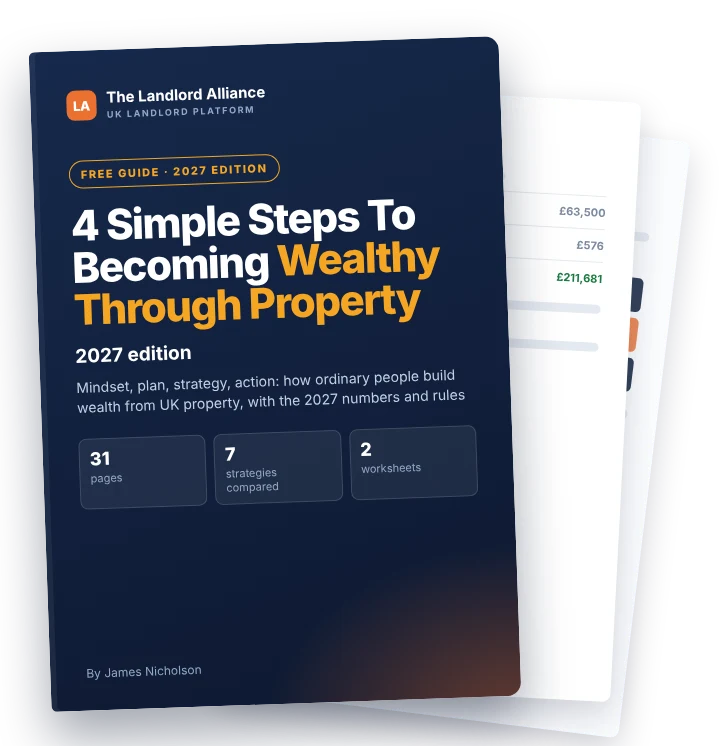
4 Simple Steps To Becoming Wealthy Through Property
Mindset, plan, strategy, action: how ordinary people build wealth from property in the UK. Mortgages cost around 6%, stamp duty on a second home is higher and the rules for letting have changed. This free property investing guide shows how it really works now, and how to start.
- The four engines of property wealth, and the one you control on day one
- A standard buy-to-let worked through honestly, before and after the 2027 tax rates
- The same house over 20 years, and what “financially free” really looks like
- Seven strategies compared, and five ways to make the numbers work
- The 2027 rules, a 90-day plan, scam warnings and two worksheets
Written by James Nicholson, landlord and founder of The Landlord Alliance
Get the free guide
We’ll email you the PDF straight away.
A standard buy-to-let in 2027, honestly
A three-bed house bought for £200,000 at full price and let for £1,150 a month, with a 75% interest-only mortgage at the November 2026 average of 6.04% and a letting agent. Every cost counted.
Full price at today’s rates isn’t how people get wealthy from property. The guide shows five ways to make the numbers work from day one.
Four steps, 13 chapters, two worksheets
Written for anyone in the UK thinking about investing in property, especially if you haven’t bought your first rental yet. Every rate, rule and figure is traced to its source.
Mindset
- Think like an investor
- Five myths that cost money
- Who you learn from
Plan
- Seven questions before you buy
- Your numbers and borrowing
- A buy-to-let, honestly
Strategy
- Seven strategies compared
- Five ways to make it work
- The 2027 rules
Get started
- Your first 90 days
- Check a deal in ten minutes
- Spot a bad deal, and a scam
Tools
- Your plan on a page
- Deal check worksheet
- FAQ and glossary
The wealth maths
- The four engines
- The same house over 20 years
- Owning homes outright
Growth is the one you control least
The average UK house price rose 74% over 20 years, but only 39% in the north-east, and inner London prices fell 7.2% in the year to September 2026. Rents rose 3.8% in the year to October. The investors who do well from here buy below value, add value, and hold for the long term. If you’re new to property and want to learn it properly, start with our Fundamentals of Property Investing course.
A quick test: would you still buy this property if it never went up in value? If not, you’re betting on the one engine you don’t control.
Property investing FAQ
Is property still a good investment in 2027?
It can be, as a long-term investment, if you buy well. At mortgage rates of around 6%, a house bought at full price with a 75% mortgage barely pays its way. The value comes from buying below value, adding value, earning more from each house and holding for years.
How much money do I need to start investing in property?
For a standard £200,000 buy-to-let in England, about £63,500 in cash: a 25% deposit, stamp duty at the higher rates and fees, plus a buffer. Rent-to-rent and lease options need less cash but bring their own risks and permissions.
What are the four steps?
Mindset, plan, strategy and getting started. The guide covers how investors think, seven questions to answer before you buy, your numbers, seven strategies compared, the 2027 rules and a 90-day plan.
Is buy-to-let still worth it after the tax changes?
From 6 April 2027 property income is taxed at 24%, 44% and 49%, with relief on mortgage interest at 24%. For a higher-rate taxpayer, a deal that only just pays before tax will lose money after it. Better-bought deals, lower borrowing or a company can still work.
Is the guide financial advice?
No. It is general information, written by a landlord and checked against official sources on 20 November 2026. Speak to a broker, an accountant and a solicitor before you commit.
Is the guide really free?
Yes. Enter your first name and email and we’ll send you the PDF. The guide mentions The Landlord Alliance and our training courses, and you can unsubscribe from our emails at any time.
Get 4 Simple Steps To Becoming Wealthy Through Property
Mindset, a plan, the right strategy and how to start, with the 2027 numbers and rules, a 90-day plan and two worksheets.
UK investors; letting rules for EnglandUpdated 20 November 2026General information, not financial or tax advice
Sources include the ONS and HM Land Registry’s UK House Price Index, the Bank of England, Moneyfacts, HMRC and the Renters’ Rights Act 2025. The full list is at the back of the guide.